 Silo Sanctuary
The Little Saints: Remembering María Sabina, Keeper of the Sacred Mushroom
Silo Sanctuary · September 3, 2026
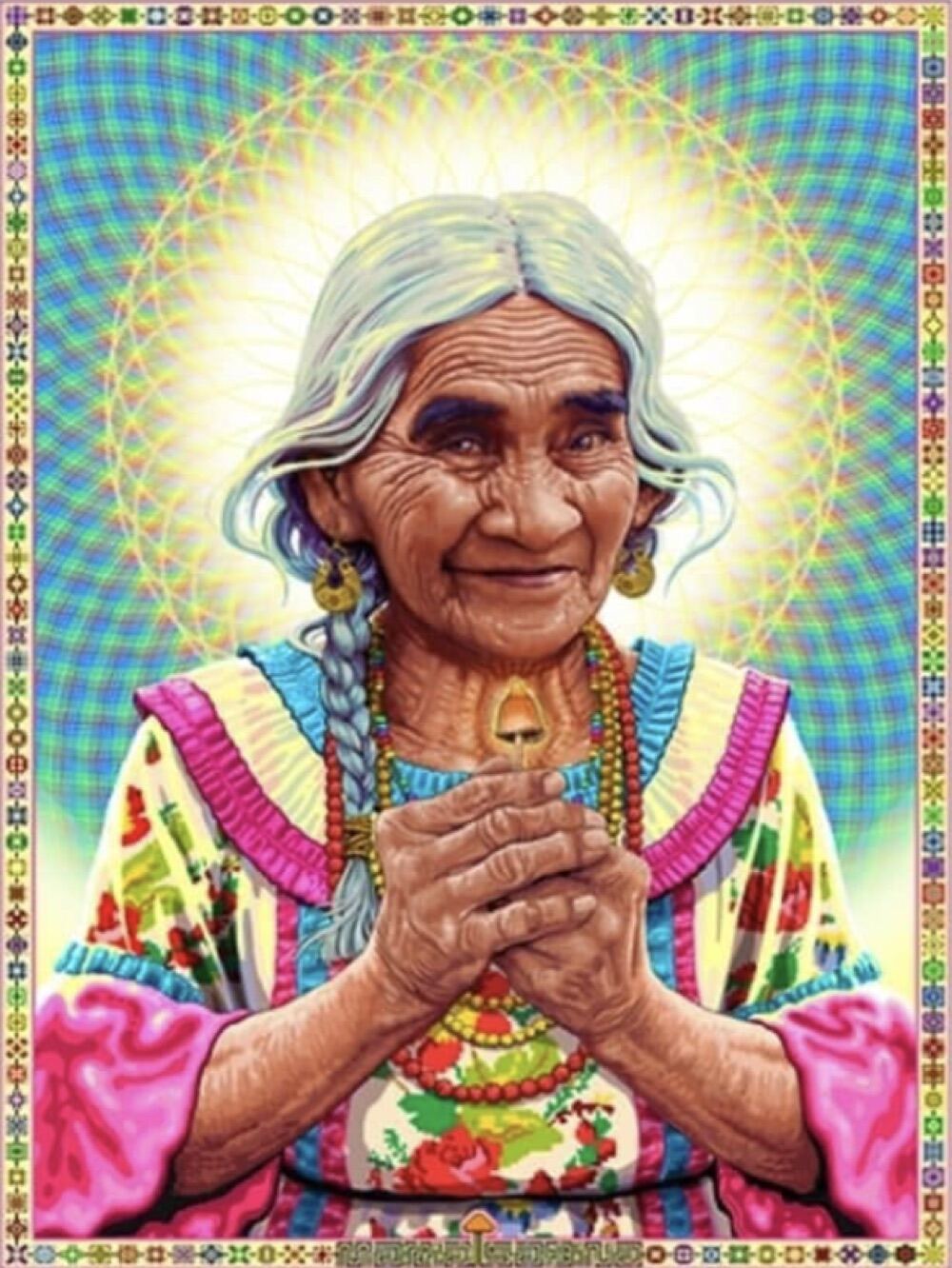
Long before microdosing became a wellness trend, before clinical trials and Silicon Valley retreats, there was a woman in the mountains of Oaxaca who spoke to the divine through mushrooms. Her name was María Sabina, and to understand why we hold ceremony with reverence rather than novelty, you have to understand her.
A healer born to the tradition
María Sabina was born around 1894 in Huautla de Jiménez, a remote village high in the Sierra Mazateca of southern Oaxaca. She wasn't sure of her exact birth year — few records reached those mountains — but she was certain of her lineage. Her grandfather and great-grandfather were curanderos, healers who worked with the sacred mushrooms, and she was drawn into their world young. As a child, she ate the mushrooms for the first time and, in her telling, began to receive their guidance.
She grew into a chjota chjine — a wise one, a healer who worked not with scalpels or medicines but with language, prayer, and the mushrooms she called los niños santos, "the little saints." For the Mazatec, these were never recreational. They were a sacrament, a way to diagnose the roots of illness, to commune with the sacred, and to guide the suffering back toward wholeness.
The velada
Her healing took the form of the velada — an all-night ceremony held in darkness. Patients came to her not out of curiosity but out of pain: the sick, the grieving, the lost. Through the night, María Sabina would eat the mushrooms alongside those she healed and sing. Her chants — improvised, hypnotic, pouring out of her for hours — were the heart of the ceremony. She said the words were not hers; the mushrooms spoke through her, and she was only the one who listened.
This is worth sitting with, because it's the opposite of how the modern world often frames psychedelics. The velada was not about sensation. It was about healing — of the body, the heart, and the spirit — held inside a container of prayer, cultural knowledge, and generations of accumulated care.
When the world arrived
In 1955, an American banker and amateur mycologist named R. Gordon Wasson made his way to Huautla, guided to María Sabina by a local leader. She was reluctant — tradition held that the ceremony was for those who were suffering, not for outsiders seeking an experience. But she relented, and Wasson became one of the first Westerners to knowingly take the sacred mushrooms in ceremony.
In 1957, Wasson published an account in Life magazine titled "Seeking the Magic Mushroom." Though he changed her name, the details he included made her identifiable, and the story traveled around the world. Within a few years, Huautla filled with seekers — students, mystics, celebrities, the merely curious — many of whom treated the ceremony as a thrill and understood nothing of the tradition behind it.
The cost she carried
This is the part of María Sabina's story that too many retellings leave out, and it's the part that matters most.
The flood of outsiders brought disruption and notoriety. Her own community turned against her, blaming her for opening a sacred practice to the world and for what looked like commercializing something that was never meant to be sold. She lost her home to a fire. And she grieved — openly and to the end of her life — that the mushrooms had been stripped of their purity. Once the ceremony was misused, she said, the little saints lost some of their power. Something sacred had been broken.
She died in 1985, honored abroad as an icon of the psychedelic age and, for much of her later life, wounded at home.
Why we tell her story
We share María Sabina's life not as a marketing story but as a responsibility. Her legacy is twofold: the profound, healing power of Indigenous wisdom — and a warning about what happens when that wisdom is taken lightly, extracted, and consumed without respect.
To hold ceremony today is to stand downstream of her. It means remembering that these mushrooms were sacred long before they were fashionable. It means treating the ceremony as she did — as healing held within tradition, guided with care, entered with humility — rather than as an experience to be collected. It means honoring the Indigenous lineages who kept this knowledge alive, often at great cost, and never pretending the tradition began with us.
María Sabina called them the little saints. The least we can do is treat them, and her memory, as sacred.
This piece is offered in respect and remembrance. If you feel called to ceremony, we encourage you to approach it — as she did — with reverence, intention, and care for the tradition that carries it.
Ready to hold ceremony with us?
Explore our ceremony formats, or reach out with any questions first.